



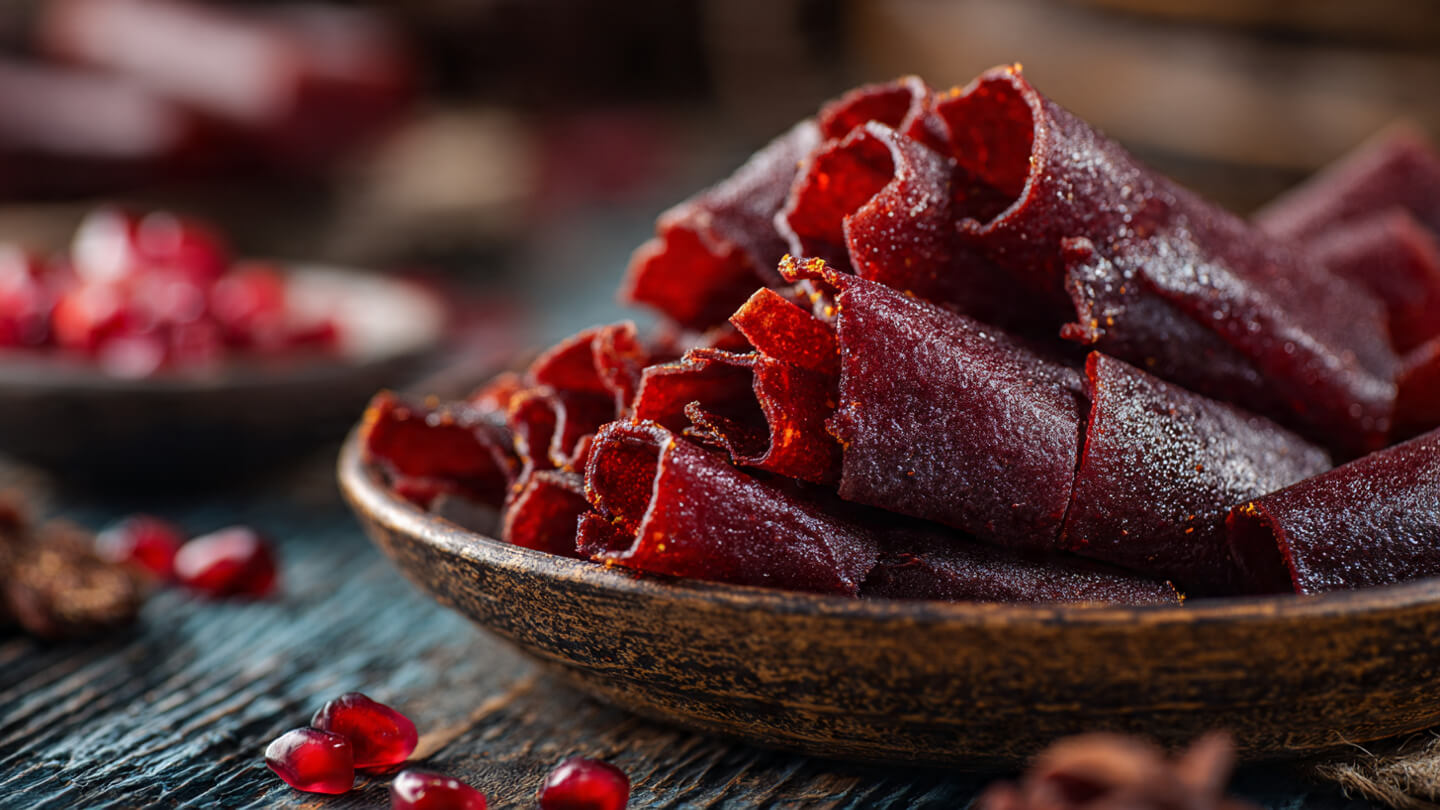
Some foods do more than fill your stomach – they bring back moments. Right when you open a piece of lavashak, the rich red shade catches your eye, then the tangy fruit smell follows close behind. Before tasting it, you’re already somewhere else – maybe age seven, perched on a flat roof under a hot sun, pulling long ribbons from their sticky backing. For those raised near Persian or Central Asian traditions, this treat is less about eating, more about remembering. It tastes like childhood, not just fruit.
What Exactly Is Lavashak?
Here’s how it begins. Lavashak takes shape when fruit gets blended into a smooth mix, then spread out in a flat layer and left to dry at low heat, slowly turning firm and flexible over time. Out of left field, sour plum punches the traditional version with zing – yet shelves today spill over with alternatives. A slow pour of pomegranate stains the mix crimson, whereas tamarind stirs in a lean, sour kick. Apricots melt into soft sugar notes, even as cherries deepen the blend like dusk settling in. Sharp little barberries spark at the edges; meanwhile, mango drapes everything in hazy island heat.
Word comes from Persia, though folks across Iran, Afghanistan, Armenia, and surrounding regions have long enjoyed chewing lavashak . Before sealed bags filled stores, families made them themselves, laying sheets out on rooftops where sunlight baked them slowly. Fruit pulp went onto wide pans, grandmothers smoothing it by hand each morning. Heat pulled moisture away until only rich taste stayed behind, tough enough to keep through winter without cold storage ever touching it.
What makes lavashak special is how old it is. Hidden inside something plain, its roots stretch far back through time.
The Taste of Lavashak Keeps Drawing People Back
Start asking around about lavashak lovers, and their faces change. A short silence comes first. This treat doesn’t fit into one flavor box. Not only sugar shows up here. Tang appears too. Together, they build something deep, tangled in memory, almost hard to quit.
Surprise – your mouth waters right away when good lavashak hits your tongue, sharp and bold. After that first kick, the fruit’s sweet side shows up quietly. A deep richness follows, almost like sun-baked soil, built slowly under heat. Certain kinds mix in chili or a pinch of salt just to wake things up more. And if it bites back with spice plus sour, it changes how you see snacks forever.
It hits differently – sugary, tangy, maybe a little heat. That mix keeps pulling you back without warning. One bite feels safe. Suddenly, twenty minutes vanish. The entire roll disappears. Your eyes drift toward the next pack.
Lavashak Beyond Borders: Not Just a Single Recipe
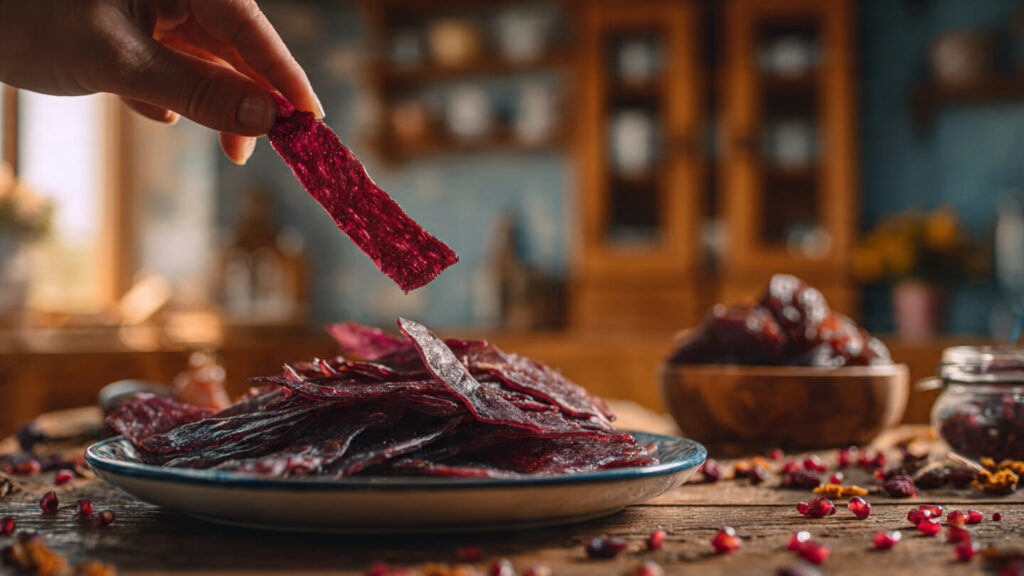
What stands out about lavashak is the way each culture shapes it differently. Sour green plums – called gojeh sabz – form a traditional version in Iran. Mulberries or apricots take center stage in Armenian kitchens, where sheets may come out as thin as parchment. Family-sized portions define Afghan preparations, which favor dense, bold strips over delicate ones.
Out here by the Caspian Sea in northern Iran, locals turn wild plums into lavashak – plums you won’t find anywhere else. Not quite the same as what they make farther south. A few households mix in rosewater, just a touch. Others reach for cinnamon instead. But plenty add nothing at all, letting the fruit speak for itself. Households differ, even when working with the same tradition. The result shifts subtly from kitchen to kitchen. Isfahan’s version feels distinct; Shiraz brings another twist altogether.
Exploring lavashak feels exciting because each region shapes it differently. One sheet might be tangy, while another leans sweet – never identical.
Also Read: The best topics for your Biology Internal Assessment.
Homemade Lavashak Production
Fresh fruit turns into lavashak slowly, needing time more than skill. Wait while slices dry out completely, left undisturbed. Though steps feel quiet, each one matters deeply. Heat gently pulls moisture away, leaving rich flavor behind. No fancy tools help here – just air, warmth, and stillness doing their work. Results arrive only after days pass without rushing.
Peel back the day with fruit prep. Rinsed first, pits pulled out – plums, apricots, or cherries meet a dash of water, bubbling softly until they give way. When they slump into tenderness, sugar drifts in, maybe salt, perhaps something spiced, added grain by grain. Heat stays low, patience holds – thickness comes like fog at dawn.
Start by making sure the cooked fruit turns silky when blended. A flawless mix comes from running it long enough in the blender. For best results, take time to reach that velvety texture. Smoothness here shapes how good the final dried sheet becomes.
Start by pouring the puree across a greased baking tray or over plastic wrap. Lay it out smooth and consistent, roughly three to four millimeters deep. A little oil keeps things from sticking during spreading.
Once done, leave it to dry. Sun drying works well if you have strong daylight – this old way needs one or two days when it is really warm outside. Another choice is using an oven set very low, about seventy degrees, and let it go for six to eight hours. The top should feel firm and tough by the end, never wet or tacky.
Peel it away when the lavashak feels crisp and dry. Cutting into strips comes next, after lifting from the tray. Storage happens in a sealed container once slicing finishes.
A jar of homemade lavashak sits on the shelf for weeks without spoiling. Crafting it yourself brings a quiet pride that sticks around far beyond the last bite.
The Nutritional Side of Lavashak
Fiber, vitamins, and antioxidants stick around when fruit turns into lavashak – that’s one reason it stands out. The process keeps most nutrients intact, just packed tighter. Take the sour plum version – it delivers plenty of vitamin C while organic acids help your body break down food. When pomegranate becomes lavashak, those deep-red compounds stay active, fighting oxidative stress quietly.
Still, lavashak packs a lot of calories because drying fruit concentrates its sugars. Though much better than store-bought sweets, it’s best eaten in small amounts – hard not to keep eating, sure, but worth slowing down.
Watch out for extra sugar and chemicals when picking packaged lavashak. Fruit alone makes the real version, sometimes with only a bit of salt. Store-bought kinds often mix in processed sweeteners and fake dyes. Look at the label when shopping – fewer items listed means closer to the original. What matters most? Simple ingredients sit higher on the list.
Lavashak Gains Recognition Beyond Borders
Out here, where everyone chases the newest food craze, lavashak just stays put on the shelves of Middle Eastern markets – quiet, unchanged. Bit by bit, though, things shift. People who care what they eat start spotting it, tasting it, asking themselves how they missed it all these years.
Truth be told, lavashak fits what people want in a snack today. Portable enough for pockets, it lasts without spoiling, built from actual fruit, packed with deep flavor, its feel and taste are unlike anything else around. Nothing currently sold feels or tastes much like it. The way it stretches when you tear it, the sharp tang followed by sweetness – really, there’s no substitute.
Now, some chefs sprinkle crumbled lavashak on salads to lift the flavor. A sharp tang wakes up each bite when it hits greens. Others melt it into warm sauces where it adds richness without weight. It sits beside soft cheeses, cutting through creaminess with ease. This fruit leather bends into roles we’re just learning how to name.
Final Thoughts: Give Lavashak a Chance
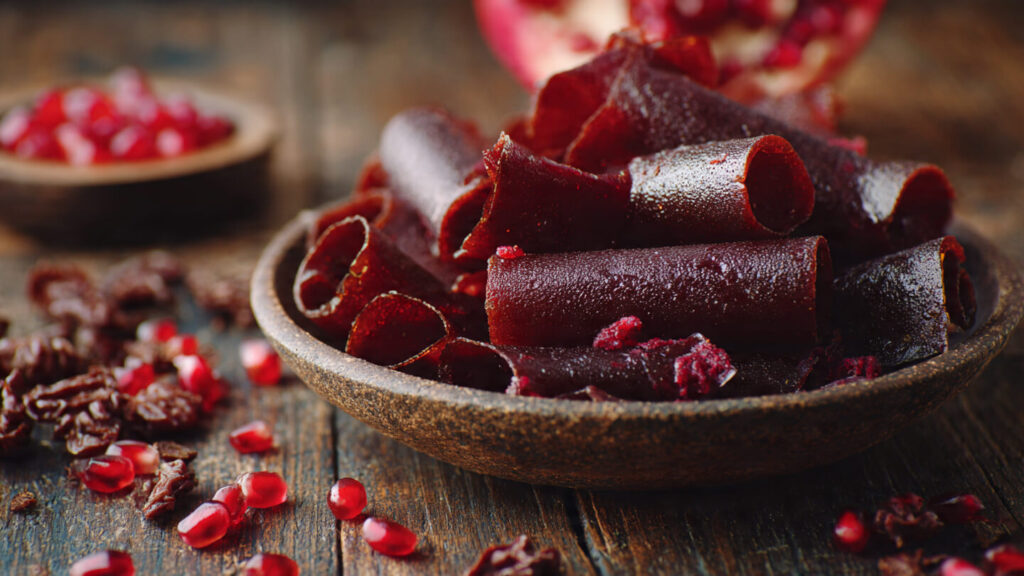
Out of nowhere comes a taste that sticks around forever. Not just any snack, but one rolled up like memories between layers of parchment paper. Grandmas spent afternoons turning fruit into sticky sheets under the summer sun. Kids would sneak strips before they even finished drying. Long rides meant pulling crumpled pieces from coat pockets, tangy bursts cutting through boredom. Even if you’ve never heard the name, your mouth might remember anyway.
A snack this good? Hard to beat.
That first tangy taste might surprise you. Whenever you pass a Middle Eastern market, pick up some lavashak. The sour plum kind works best for beginners. One small bite wakes up your tongue. See how long you last before reaching for another.
FAQS
Q1: What is lavashak made of?
Out in the open air, fruit gets mashed down till it’s completely smooth. A wide tray catches the mix, poured on so thin you could almost see through it. Heat comes next, gentle and slow, pulling out moisture without hardening the sheet. Sour plums often lead the way, though many prefer the tang of pomegranate or tamarind instead. Apricots lend sweetness; cherries add depth; barberries bring sharpness; even mango finds its place here. Once set, the result bends slightly when lifted – never brittle. Nothing sneaks in except the fruit itself, maybe just a trace of salt if anything.
Q2: Where does lavashak come from?
Lavashak began in Persia, woven into daily life throughout Iran, Afghanistan, Armenia, and nearby parts of Central Asia. Back then, households prepared it themselves, laying thin layers of mashed fruit onto large trays, leaving them out on flat roofs where sunlight slowly pulled the moisture away – a quiet practice passed down many generations, well before sealed bags appeared on shelves.
Q3: Is lavashak healthy?
True, sometimes – though the method matters most. From start to finish, if done at home or kept close to nature, lavashak holds onto the good stuff: fiber, nutrients, those plant-based protectors. Since removing water packs the sweetness tighter, each bite carries more calories, so small amounts make sense. Peek under the hood when picking store versions – shorter ingredient lines usually point to something truer to its roots.
Q4: How do you make lavashak at home?
Begin with simmering the selected fruit alongside a splash of water till tender, after that whirl it into a velvety mash. Lay it out thinly – roughly between three and four millimeters – over an oiled surface using even strokes. Let it sit under bright sun for up to two full days or slide it into an oven set near seventy degrees Celsius for most of a day instead. When the sheet feels dry to touch and holds its shape without stickiness, lift it gently, cut into long pieces, pack away tightly where moisture can’t reach – it stays good through many weeks ahead.
Q5: Why does lavashak taste so addictive?
Surprise lives in how the tastes stack up. Right away comes a zing that pricks the tongue, while underneath hums a soft wave of sugar from the fruit itself. After that settles, warmth spreads through like afternoon light soaked into stone. A few versions stir in heat from peppers or a pinch of salt to stretch the experience wider. Opposites pull and ease – sharp against mellow, bright versus earth – which tricks you into reaching again before realizing it. One moment you’re tasting, next you’re halfway through the bowl.